Research Projects
Our lab's research spans across various domains, ranging from hardware development to the creation of controllers utilizing Optimal Controls, learning-based controls, and safety-critical controls. The following research areas and projects serve as a testament to this diverse spectrum of work.
End-to-End Learning-Based Control for Legged Locomotion
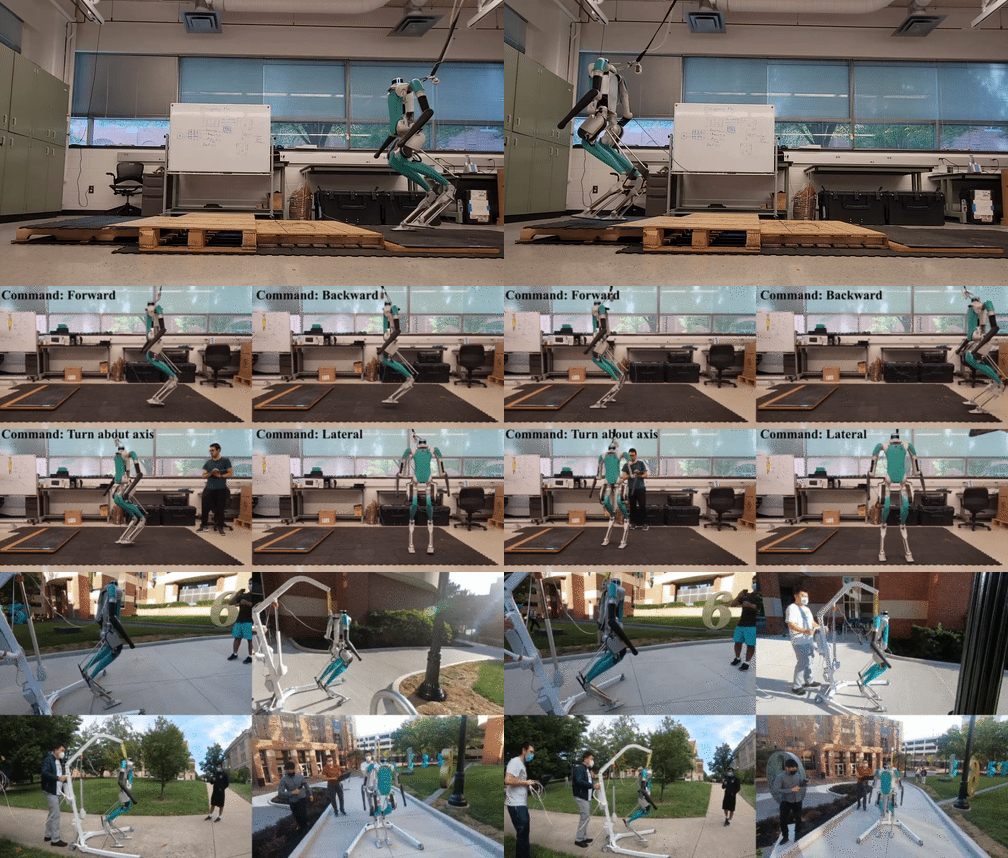
We develop learning-based control frameworks that let legged robots move robustly over challenging terrain. By combining reinforcement learning, trajectory optimization, and model-based planning, our methods produce control policies — often simple linear or mirror-descent structures — that transfer directly to real hardware and adapt online to unknown loads, slopes, and stairs.
Safety-Critical Control
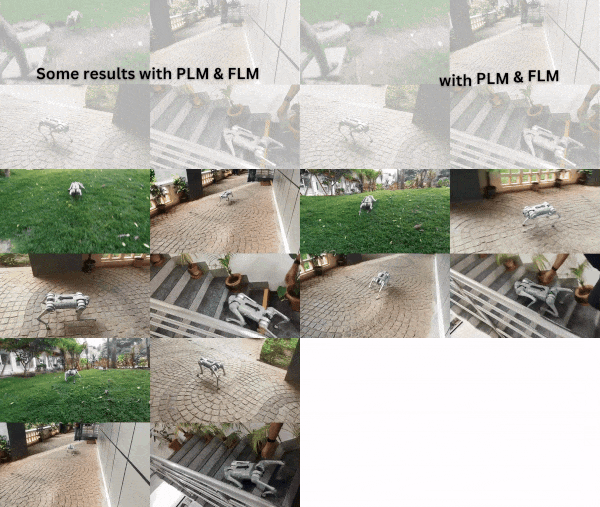
We build safety-critical control methods that provide formal guarantees without sacrificing performance. Using control barrier functions and physics-informed learning, our work keeps legged robots and autonomous systems inside safe sets — avoiding collisions, energy violations, and unsafe states even under stochastic uncertainty.
Co-Design for Legged Systems
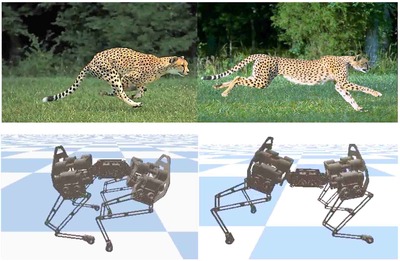
We treat a robot's morphology and its controller as one coupled design problem. Through co-design and actuator optimization, our lab simultaneously optimizes hardware parameters and control policies — from active spines and dynamic manipulators to full quadruped platforms — to push the limits of what these systems can do.
Humanoids Research
Our humanoids research targets bipedal and humanoid platforms that can traverse real-world terrain. We develop learning-based control pipelines that make these complex, underactuated systems stable, efficient, and agile in the face of disturbances.